
Data on the menu
Unfortunate evidence that spinach is good for you

The journey to wisdom can take many forms. Sometimes it begins not with a grand project or an expensive setup—but with something as simple as downloading a file or cranking in some information in a spreadsheet.
Let’s take a small, personal example: the goal of eating healthier. How can data help support that goal?
Recently, i found an official dataset from the Danish authorities containing detailed nutritional information about various foods. The data lifecycle that begins with ingestion simply involved downloading this file to my desktop. Nothing fancy, no database connections or APIs, just a regular spreadsheet with multiple sheets listing foods, their categories, and nutritional values.
That’s it. Data ingestion can be that simple.
More than just raw numbers
The file itself came with a few sheets but the data was not normalized for what i would like to work with. Therefore i performed some transformations which is also an inherent part of producing knowledge products. What kind of questions would i like to answer from the data? It could be which types of food have the most vitamins?
In order to answer these types of questions i’d imagine some data model that may enlighten us about the true state of the world. The analytics is centered around some nutritional values. We want to view these KPIs or metrics from the perspectives of the type of food, food group and nutrition parameter such as vitamins, proteins, carbs and so on. Conceptually this small experimental project may look like figure 1.1
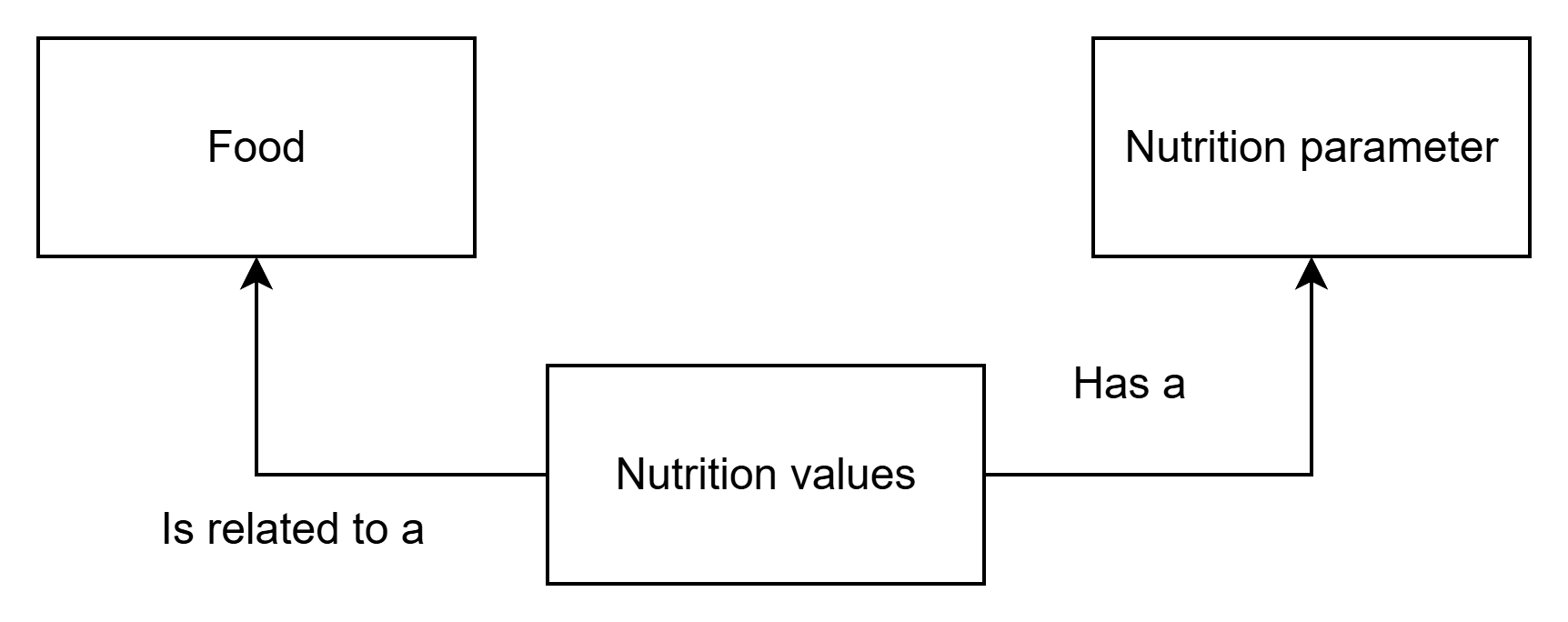
Figure 1.1 Conceptual data model for nutritional analytical model
The conceptual model can be translated into a physical data model by the transformations in this case made in microsoft power query. Figure1.2 is the table view of the food dimension. It contains a surrogate key, a food name and the food group.
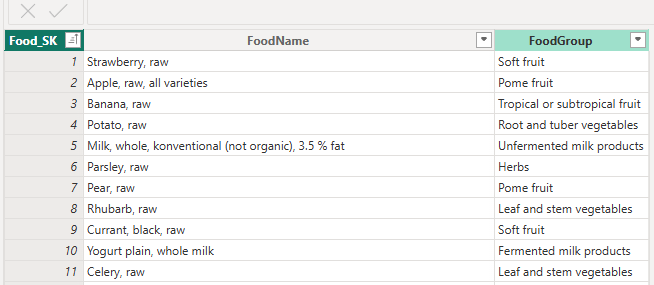
Figure 1.2 Food dimension
The nutrition parameter dimension holds the information about what the value measures and what unit it is reported in. Figure 1.3 shows the first 16 rows of this dimension.
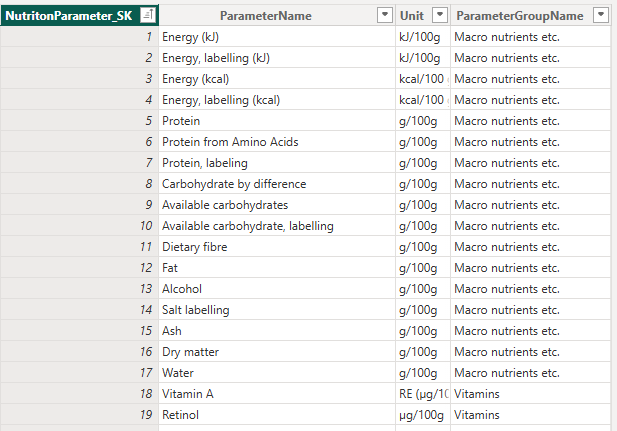
Figure 1.3 Nutrition parameter dimension
The fact table then holds the values and then surrogate keys related to the dimensions. To make the dimensional model all it takes is creating the relationships from the facts to the dimensions shown in figure 1.4
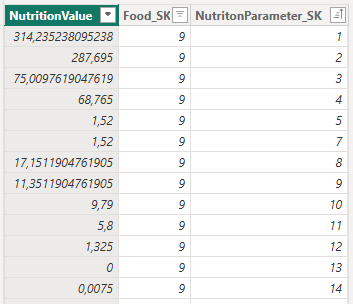
Figure 1.4 Fact table
Asking questions to the data model
Let’s try to answer some of our question, for example what food groups contain the highest average vitamin content across different vitamins. Consider this table. It shows vitamin A and C values for certain foods in micrograms per 100 gram. The recommended daily intake is around 900 micrograms of vitamin A and 90000 micrograms of vitamin C. This can be consumed eating for example around 50 grams of raw rose hip. We can also see that peppers rank quite high as well as some soft drinks with sugar added, which may be fortified.
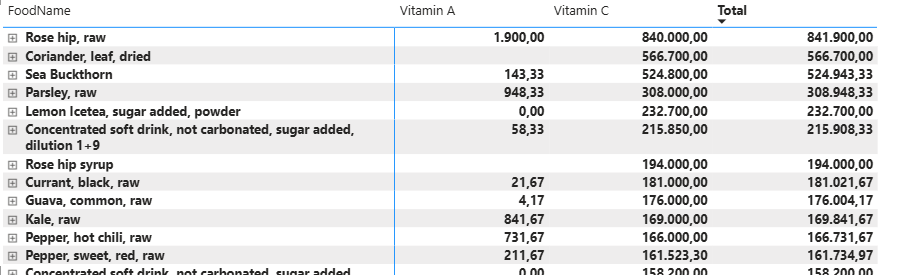
Figure 1.5 Sorted foods on vitamin A and C content in micrograms per 100 gram
Vitamin K is typically dominated by leafy greens and herbs, which the data confirms in figure 1.6.
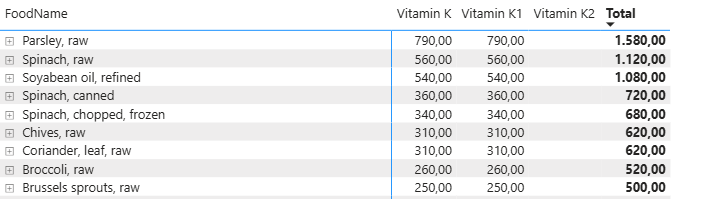
Figure 1.6 Sorted foods on vitamin K content in micrograms per 100 gram.
This analytics may be considered the “Hello World” version of working with data, but we have to start somewhere and to turn data into wisdom requires work.
From manual processes to scale able knowledge factories
While this example runs on a local computer, it could easily grow into a more robust, shareable solution. For example:
Automate data ingestion through an API instead of manual downloads.
Store and manage the data in a local or cloud database.
Transform it programmatically using a notebook or script.
Visualize insights through dashboards or apps.
This more scalable setup doesn’t rely on one person’s laptop—it allows the data to live, breathe, and evolve in a shared environment. It also opens doors to new use cases: building meal plans based on nutritional goals, tracking dietary balance over time, or combining data from multiple sources.
The moral of the story: Eat spinach for more vitamin K